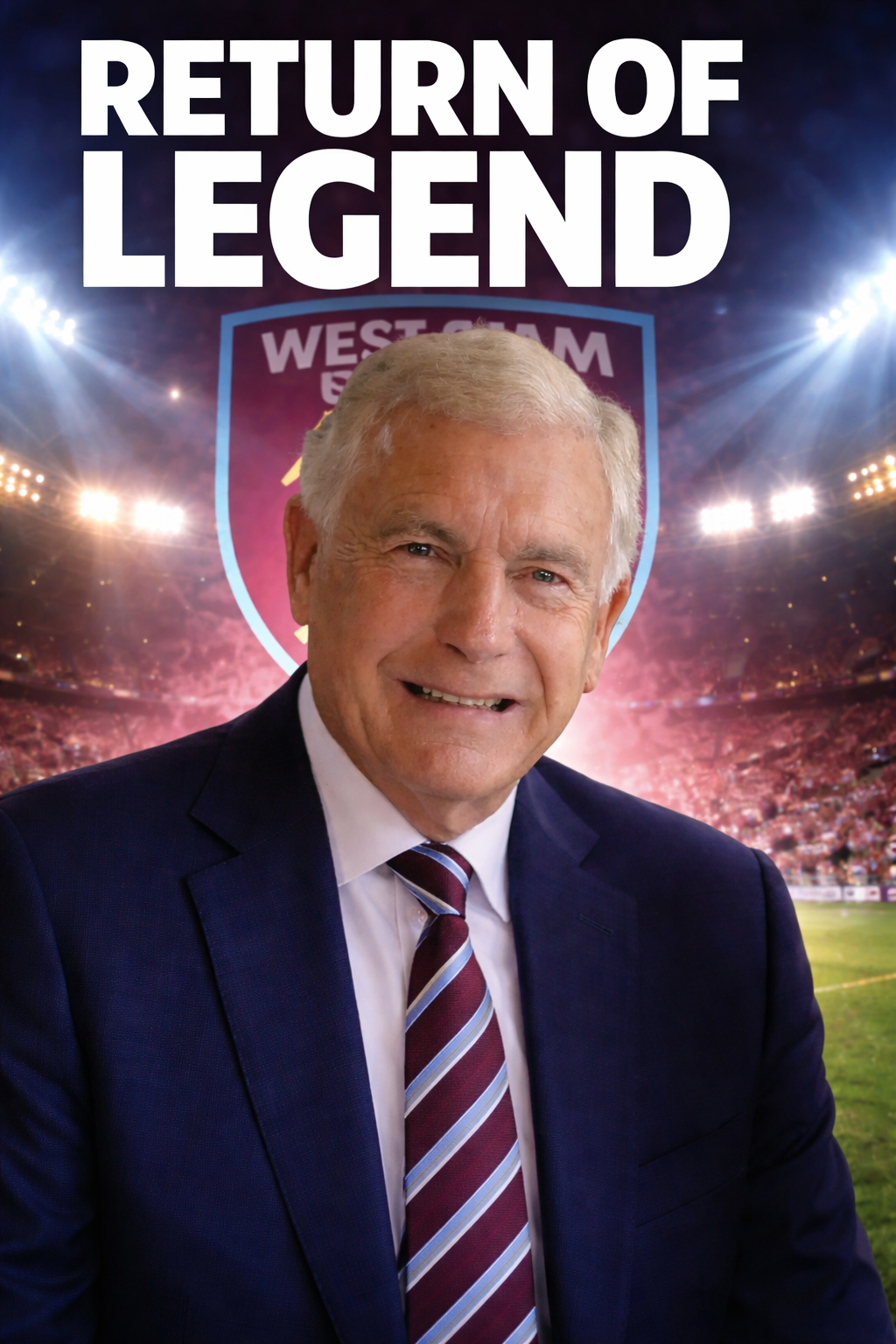
The announcement from Netflix came without warning, but within minutes it had gripped the football world. Cameras, they said, had already been rolling for weeks inside West Ham United, quietly documenting the arrival of their new head coach, Nuno Espírito Santo.
What no one knew, however, was just how much those cameras would capture.
—
On a cold London morning, long before the news broke, Nuno stood alone at the edge of the training pitch. The grass shimmered with frost, and the stadium seats loomed empty behind him. A single camera lingered at a distance, its red light blinking. He didn’t look at it. He never did.
“Again,” he said calmly, watching his players run drills for the third time in under an hour.
The players were exhausted, confused even. This wasn’t the West Ham they knew. Training was sharper, quieter, more intense. Nuno demanded discipline—not just in movement, but in thought. Every pass had purpose. Every run had timing.
“Football is not chaos,” he told them later in the dressing room. “It is controlled fire.”
The documentary crew exchanged glances. This was gold.
—
By the time Netflix officially announced the project, whispers had already begun to circulate among fans. Some believed it would be a standard behind-the-scenes series. Others suspected something deeper—a transformation story.
They were both right.
Episode One opened not with a match, but with silence. A slow pan across the empty stadium. Then Nuno’s voice:
“I did not come here to continue a story. I came to rewrite it.”
Clips followed—his early career, past triumphs, quiet failures, and the reputation he carried into London. But the real story unfolded in real time.
—
Inside the club, tensions simmered.
Senior players questioned the sudden changes. Younger players felt the pressure of expectation. In one scene, captured late at night, a heated discussion broke out between two teammates after a narrow defeat. The cameras didn’t cut.
Nuno watched the footage the next day.
“Good,” he said simply.
The assistant coach looked confused. “Good?”
“They care,” Nuno replied. “Now we shape that.”
—
As the season progressed, the documentary revealed something few outsiders had ever seen: the psychological side of management. Nuno held one-on-one meetings not about tactics, but about fear, ambition, and identity.
“What do you want to become?” he asked a struggling midfielder.
“A better player,” came the reply.
Nuno shook his head. “That is not enough.”
—
Wins began to come—but slowly.
A dramatic late goal. A disciplined defensive masterclass. A comeback that no one expected. Each moment was captured in cinematic detail, but it was the quiet scenes that stayed with viewers: Nuno studying alone, writing notes in a small black book, replaying moments over and over.
The cameras caught everything.
Even the doubts.
—
Midway through the season, a crisis hit. Injuries piled up. A string of losses followed. Pundits questioned the project. Fans grew restless.
The documentary didn’t hide it.
One episode ended with a brutal montage of criticism—headlines, radio debates, social media backlash. Then a cut to Nuno, sitting in darkness.
No words.
Just silence.
—
The next episode began differently.
Training was louder. Faster. The players moved with urgency. Something had changed.
In a powerful locker room scene, Nuno finally raised his voice.
“This is where we decide who we are!”
The moment went viral even before the episode aired.
—
By the final stretch of the season, West Ham looked like a different team. Not perfect—but united. Focused. Dangerous.
The documentary built toward one defining match—a game that would determine whether the season was a failure or the beginning of something new.
The cameras were everywhere: the tunnel, the bench, the stands.
As the players lined up, Nuno stood still, eyes closed for a brief second.
Then he stepped forward.
—
The final whistle blew.
The result? Netflix didn’t spoil it in the trailer.
Instead, the series ended with Nuno walking alone once more, back onto the pitch under the stadium lights. This time, the seats weren’t empty. They were filled with echoes—of everything that had happened, everything that had changed.
He looked up, finally acknowledging the camera.
“Now,” he said quietly, “they understand.”
—
When the documentary premiered, it wasn’t just seen as a football story. It became something bigger—a study of leadership, pressure, and transformation.
And for West Ham United fans, it was more than entertainment.
It was belief.