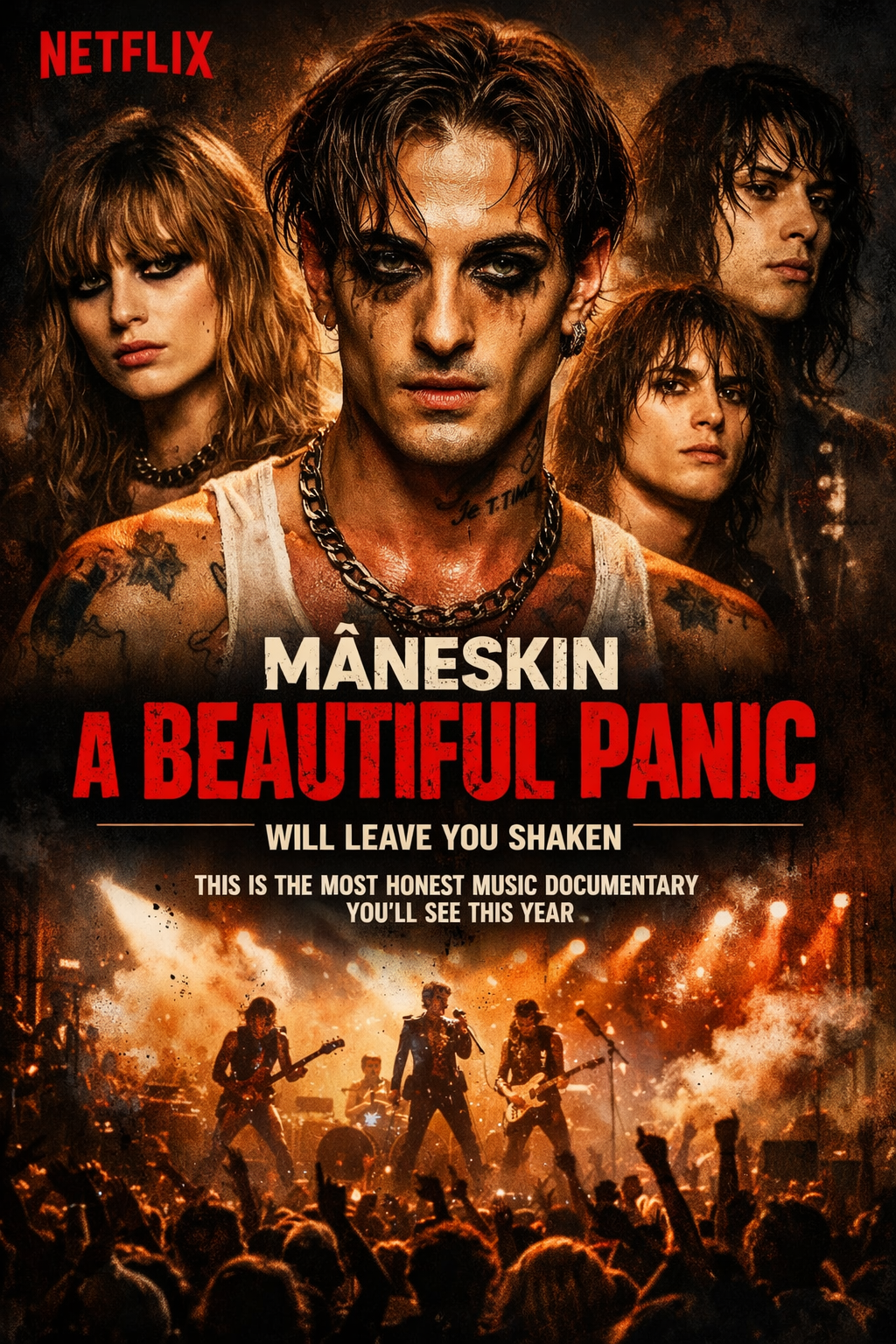
Netflix’s A Beautiful Panic Will Leave You Shaken — This Is the Most Honest Music Documentary You’ll See This Year
Netflix doesn’t often whisper—but A Beautiful Panic arrives without noise, without warning, and somehow hits harder than anything loud. From the first quiet frame, it’s clear this is not a documentary chasing applause or mythology. This is a film that stares directly into discomfort, creativity, fear, and survival—and refuses to look away.
A Beautiful Panic strips music stardom down to its most human elements. There are no glossy timelines or trophy montages. Instead, the documentary unfolds like a confession. Studio lights flicker on exhausted faces. Hotel rooms feel too quiet. Applause fades quickly, leaving behind questions no encore can answer. The film isn’t interested in how success looks—it’s obsessed with how it feels.
At its core, the documentary explores the psychological tension that lives inside artists who create under pressure. The panic isn’t theatrical. It’s subtle. It’s the silence before going on stage. The doubt after a hit song. The fear of being honest when honesty costs everything. Netflix doesn’t frame these moments as weakness—it frames them as the price of caring deeply.
What makes A Beautiful Panic extraordinary is its restraint. There is no narrator telling you what to think. The camera lingers. Conversations trail off. Long pauses are allowed to breathe. In one haunting sequence, an artist sits alone after a sold-out show, still in stage clothes, staring at nothing. No words are spoken—but everything is said.
The documentary also challenges the romanticized idea of “suffering for art.” It doesn’t glorify burnout or emotional collapse. Instead, it asks harder questions: How much of yourself can you give before there’s nothing left? And who are you when the music stops? These questions echo long after the screen goes dark.
Fans expecting a traditional music documentary may be surprised. There are performances—but they’re fragmented, imperfect, human. Lyrics are discussed not as poetry, but as survival tools. Fame is portrayed less as a reward and more as a mirror—one that reflects insecurities at full volume.
Social media reaction has been intense and deeply personal. Viewers describe feeling “seen,” “unsettled,” and “unexpectedly emotional.” Many say the documentary feels less like entertainment and more like therapy—an invitation to sit with anxiety rather than outrun it.
Netflix has released plenty of acclaimed music films, but A Beautiful Panic feels different. Braver. Quieter. More dangerous. It doesn’t want to inspire you. It wants to tell the truth.
And the truth, as this documentary shows, is beautiful—
but it panics.