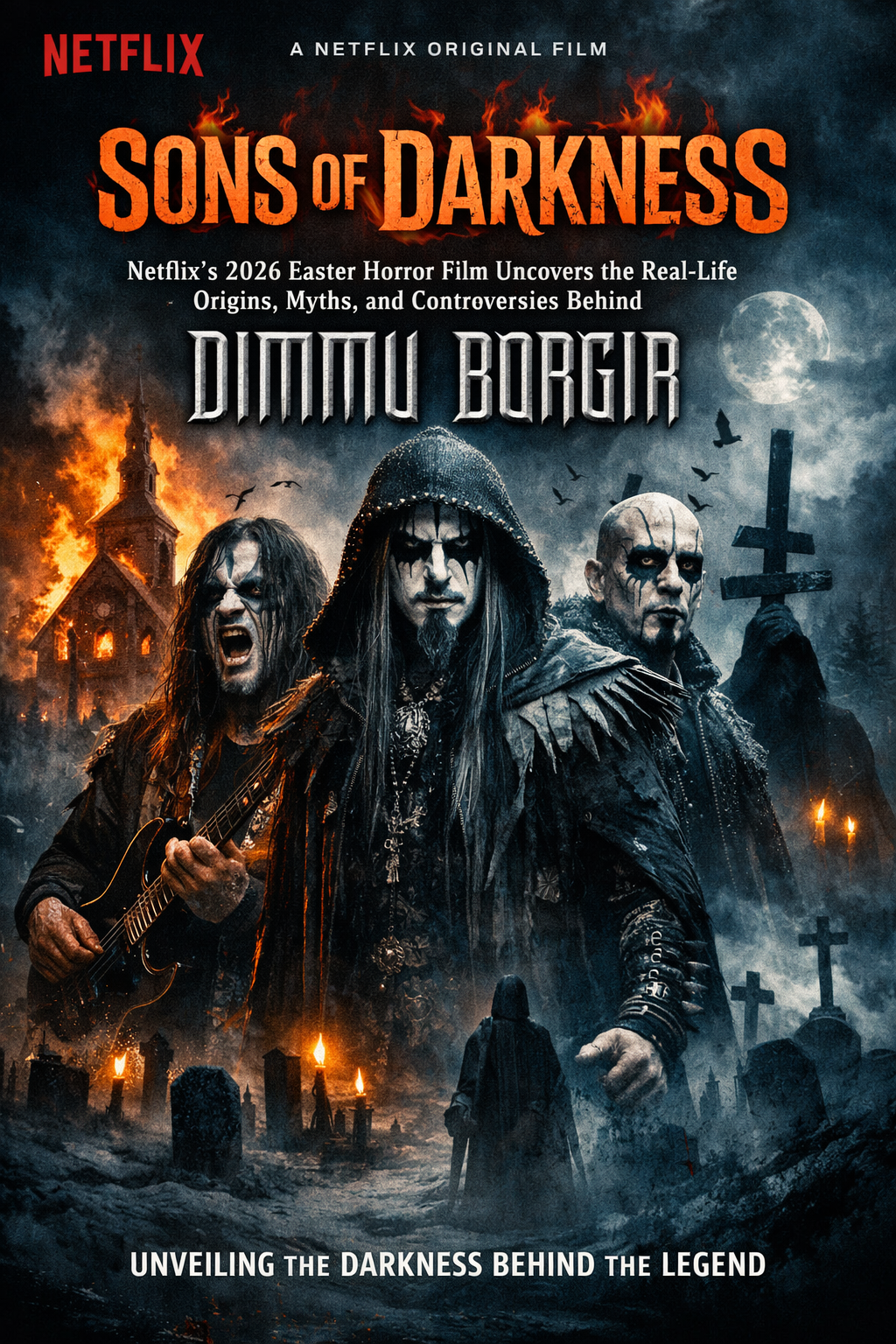
🔥 SONS OF DARKNESS 🔥
Netflix’s 2026 Easter Horror Film Uncovers the Real-Life Origins, Myths, and Controversies Behind Dimmu Borgir
In Easter 2026, Netflix takes a daring step into uncharted territory with Sons of Darkness, a chilling horror-biographical film that explores the real-life events, cultural tensions, and artistic rebellion that shaped one of the most influential bands in extreme music history. Blending historical realism with psychological horror, the movie is designed not merely to entertain, but to disturb, provoke, and challenge long-held assumptions about art, fear, and morality.
Sons of Darkness is set in early-1990s Norway, a period marked by isolation, long winters, and a generation of young musicians pushing back against religion, conformity, and commercial culture. The film carefully reconstructs this environment, portraying a society that felt emotionally frozen and culturally suffocating. Against this backdrop, music becomes a form of survival—a dark language spoken by those who felt unheard.
Rather than functioning as a traditional biopic, the film unfolds like a slow-burning nightmare. It avoids exaggerated fantasy, choosing instead to ground its horror in reality. Abandoned churches, damp rehearsal rooms, forest paths buried in snow, and candle-lit interiors form the visual spine of the movie. Every setting feels oppressive, as if the environment itself is complicit in what unfolds. The horror does not rely on jump scares, but on tension, silence, and a growing sense of inevitability.
At the core of the story is the emergence of a sound that fused raw black metal with grand, symphonic elements—an approach that would later set the band apart on a global scale. The film shows how this musical ambition was misunderstood at the time, both within the underground scene and by the outside world. What some saw as artistic innovation, others perceived as provocation or threat.
Sons of Darkness does not ignore the darker chapters of the era. It addresses the real-life controversies that surrounded the Norwegian black metal scene, including arson attacks on historic churches, ideological extremism, and intense media backlash. These events are portrayed with restraint and context, emphasizing consequences rather than glorification. The film makes it clear that while music can express anger and rebellion, real-world actions carry irreversible weight.
One of the most compelling aspects of the film is its focus on identity. The use of corpse paint, pseudonyms, and theatrical performances is explored as more than shock value. In the narrative, these elements are portrayed as a rejection of imposed identity and a reclaiming of self through art. The film illustrates how this visual language was misinterpreted by tabloids and authorities, fueling fear and misunderstanding across Europe and beyond.
The performances are intentionally subdued and intense. Characters speak little, allowing music, facial expressions, and atmosphere to carry the story. When dialogue appears, it often centers on philosophy—questions about belief, freedom, hypocrisy, and the role of art in society. These conversations feel heavy, almost dangerous, as though speaking too openly might invite consequences.
Sound design plays a crucial role in building dread. Distorted guitars merge with orchestral arrangements, while ambient noise—wind, creaking wood, distant echoes—creates an almost ritualistic rhythm. At times, the music feels less like a soundtrack and more like an unseen character guiding the story forward. Silence is used just as powerfully, forcing viewers to sit with discomfort rather than escape it.
Netflix positions Sons of Darkness as intentional counter-programming for Easter 2026. While the season traditionally celebrates rebirth and light, the film explores decay, doubt, and inner darkness. This contrast has already sparked debate online, with some praising the platform’s boldness and others criticizing the timing. The filmmakers, however, frame the release as symbolic—arguing that confronting darkness is often the first step toward transformation.
Visually, the movie is stark and uncompromising. Practical effects are favored, giving performances and environments a raw authenticity. Stage scenes are shot with near-documentary realism, while dreamlike sequences blur the line between memory and nightmare. The camera often lingers too long, creating discomfort and refusing to let the audience look away.
Ultimately, Sons of Darkness is not a celebration of chaos, nor a condemnation of art. It is an examination of how fear is created—by society, by media, and by misunderstanding. It asks difficult questions about where artistic expression ends and responsibility begins, and whether darkness in art reflects violence or simply exposes what already exists beneath the surface.
By the final act, the film leaves viewers unsettled but informed. It does not offer easy answers or moral shortcuts. Instead, it presents a complex, human story about music born from isolation, controversy shaped by perception, and a moment in cultural history that continues to echo decades later.
Sons of Darkness arrives as one of Netflix’s most ambitious and controversial films yet—an unflinching descent into reality, myth, and the cost of creating art in the shadows.