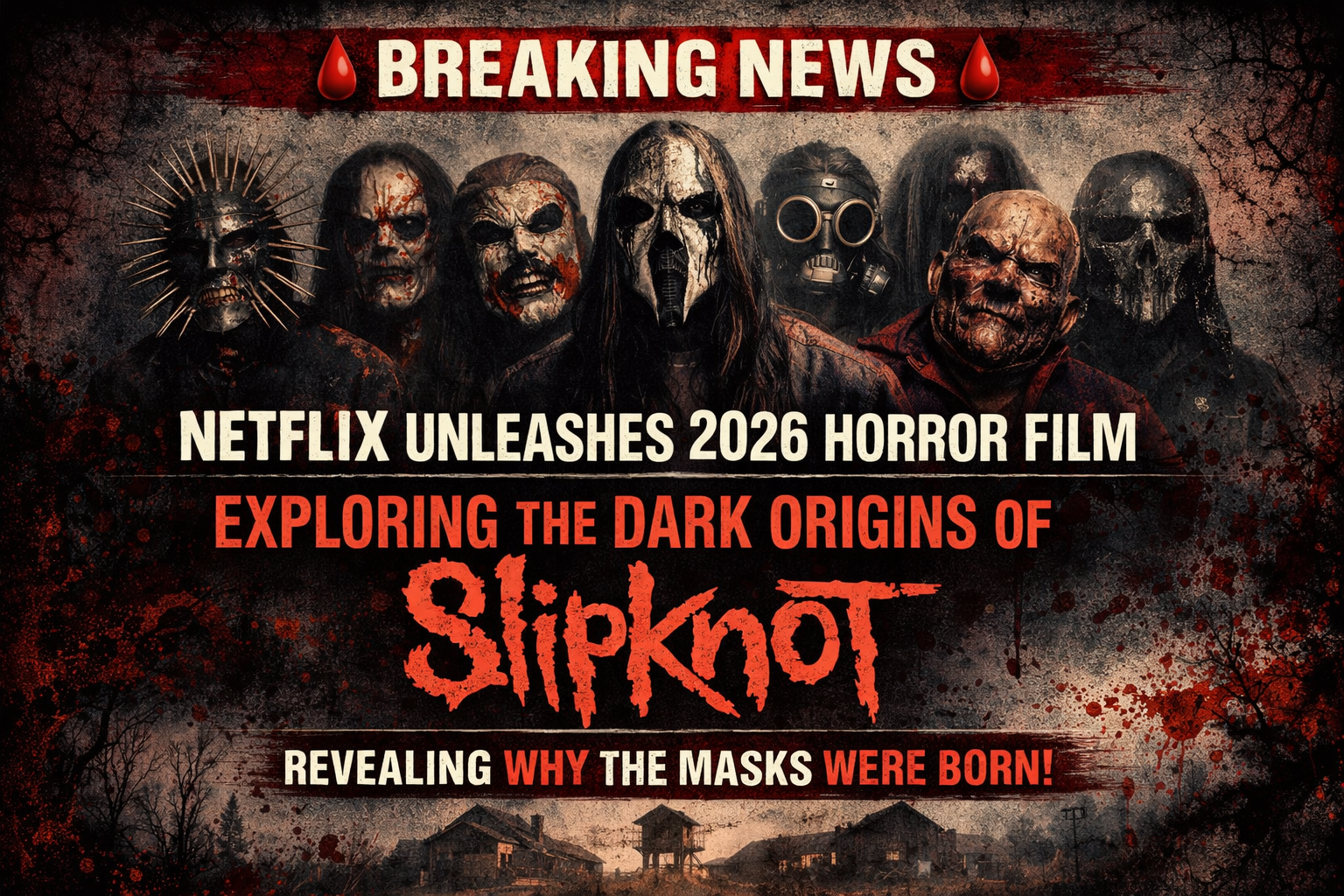
🩸 Breaking News: Netflix Unleashes a 2026 Horror Film Exploring the Dark Origins of Slipknot — Revealing Why the Masks Were Born
In a bold move that blurs the line between music documentary and full-scale psychological horror, Netflix has officially announced a 2026 horror feature centered on the origin story of Slipknot. The film promises to dig deeper than any previous portrayal, confronting the unsettling roots of the band’s identity, the trauma embedded in their sound, and the true meaning behind the masks that turned nine musicians from Iowa into global symbols of controlled chaos and fear.
Unlike conventional rock documentaries, this project is being framed as a cinematic horror experience. According to early production notes, the film will combine dramatized scenes, archival footage, and experimental storytelling to place viewers inside the psychological landscape that shaped Slipknot’s emergence. The goal is not just to explain the band’s history, but to make audiences feel it—the anger, isolation, violence, and emotional suffocation that defined their early years.
At the heart of the film lies a simple but haunting question: Why did Slipknot choose to look terrifying? The movie argues that the masks were never a gimmick. Instead, they were born from necessity. Growing up in Des Moines, Iowa, the band members came of age in an environment marked by economic struggle, broken homes, substance abuse, and a pervasive sense of being overlooked by the wider world. The masks became armor—ways to erase personal identity and transform pain into something louder, more dangerous, and impossible to ignore.
The horror film reportedly opens in near silence, depicting bleak Midwestern landscapes and claustrophobic interiors. As the story unfolds, viewers are introduced to fictionalized versions of the band members, each grappling with inner demons that manifest visually throughout the film. Nightmares bleed into reality. Rehearsal rooms feel like prisons. Faces distort, identities fracture, and rage simmers just beneath the surface. The film uses horror imagery not to shock for shock’s sake, but to represent the psychological pressure that fueled Slipknot’s sound.
Music plays a central role, but not in a celebratory way. Early demo tracks and distorted soundscapes are woven into the film’s score, creating a relentless sense of unease. Percussion echoes like approaching footsteps. Screams dissolve into static. Guitars feel less like instruments and more like weapons. The film reportedly treats Slipknot’s music as an extension of the horror itself—raw emotion weaponized into sound.
One of the most anticipated aspects of the movie is its exploration of anonymity. By hiding behind masks and numbers, Slipknot rejected celebrity culture before achieving fame. The film presents this choice as an act of rebellion against ego, conformity, and exploitation. In the narrative, the loss of identity is portrayed as both terrifying and liberating. Without faces, the band members become vessels for collective rage—less human, more myth.
Netflix has described the film as “a psychological descent rather than a biography,” signaling that viewers should expect symbolism, surreal imagery, and unsettling pacing. Scenes reportedly draw inspiration from classic psychological horror, industrial decay, and underground art culture. The band’s rise is not shown as a glamorous ascent, but as a violent eruption—something that had to break out, no matter the cost.
Importantly, the movie does not shy away from controversy or darkness. Themes of grief, self-destruction, and emotional isolation are front and center. Rather than polishing Slipknot’s image, the film leans into the discomfort that has always defined the band. It challenges viewers to confront why society fears anger, why masks disturb us, and why extreme art often emerges from extreme pain.
Industry insiders suggest the project could redefine how music stories are told on screen. By fully committing to horror as a narrative lens, Netflix is betting that audiences are ready for something more visceral than traditional documentaries. The film is expected to resonate not only with Slipknot fans, but also with horror enthusiasts and viewers interested in the psychology of rebellion, identity, and transformation.
As anticipation builds toward its 2026 release, one thing is clear: this is not a nostalgia piece, a tribute concert, or a fan-service documentary. It is a confrontation. A descent into the shadows where Slipknot was born. And a reminder that sometimes, the scariest masks are not worn to frighten others—but to survive what lies within.