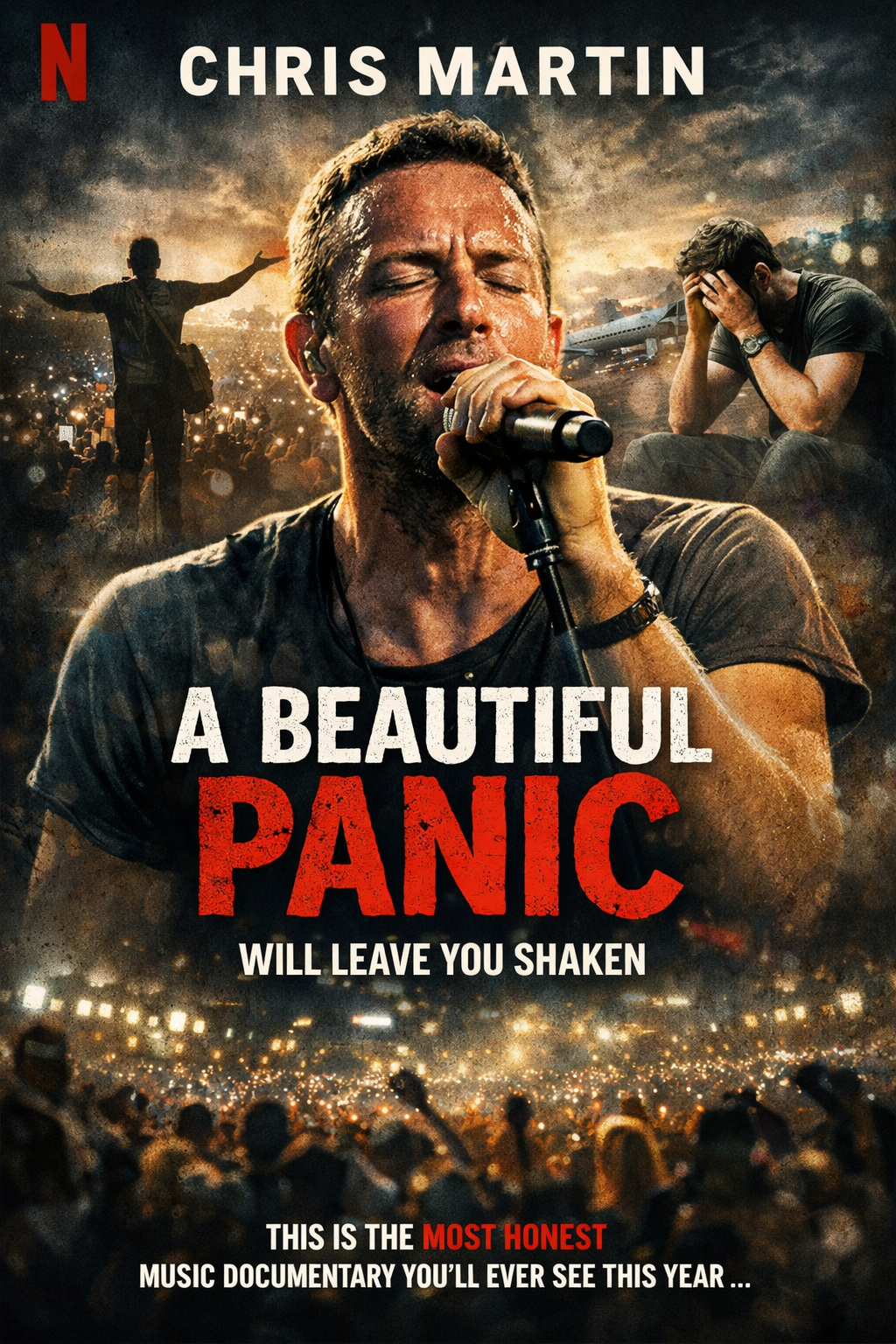
Chris Martin: Netflix’s A Beautiful Panic Will Leave You Shaken — The Most Honest Music Documentary You’ll See This Year
Netflix’s A Beautiful Panic doesn’t arrive with spectacle or celebration. It arrives quietly, almost cautiously, and that restraint is exactly what makes it devastating. This is not a portrait of Chris Martin the stadium icon or Coldplay frontman. It is a study of Chris Martin the human being—open, uncertain, reflective, and unafraid to sit inside his own questions.
From the opening moments, the documentary signals its intention to slow everything down. The camera lingers on empty rooms, unfinished melodies, and long silences between thoughts. Martin is shown not in performance mode, but in pause—walking alone, scribbling lyrics, replaying old recordings, and confronting the emotional weight that comes with being a global symbol of optimism.
What makes A Beautiful Panic so striking is its honesty. Martin speaks candidly about anxiety, self-doubt, and the pressure of always being “the hopeful one.” The film doesn’t frame these moments as dramatic revelations. Instead, they unfold naturally, like conversations you weren’t meant to overhear. There is no narrator guiding the audience, no swelling music to soften the truth. Just stillness, breath, and reflection.
The documentary explores how belief—something Martin has long championed through his music—can be both grounding and exhausting. In one of the film’s most powerful sequences, he reflects on the fear of letting people down, admitting that optimism can sometimes feel like a responsibility rather than a choice. It’s a rare acknowledgment of the emotional labor behind positivity, and it lands with quiet force.
Music appears throughout the film, but never as spectacle. Songs are shown in fragments: a piano line abandoned halfway through, lyrics rewritten late at night, a melody hummed and then discarded. These moments reveal music not as performance, but as processing—a way to survive thoughts that refuse to stay quiet.
Visually, A Beautiful Panic is intimate and unpolished. Handheld shots, natural light, and unguarded expressions create a sense of closeness that feels almost intrusive. The film allows discomfort to exist without resolution, trusting the audience to sit with it rather than escape it.
Early reactions describe the documentary as deeply moving and unexpectedly personal. Fans and non-fans alike have responded to its vulnerability, noting that it feels less like entertainment and more like an emotional conversation. Many say it captures feelings they struggle to articulate themselves—fear, hope, exhaustion, and the fragile balance between them.
Netflix has released many music documentaries, but A Beautiful Panic stands apart. It doesn’t mythologize success. It humanizes it.
And by doing so, it leaves you shaken—not by noise, but by truth.