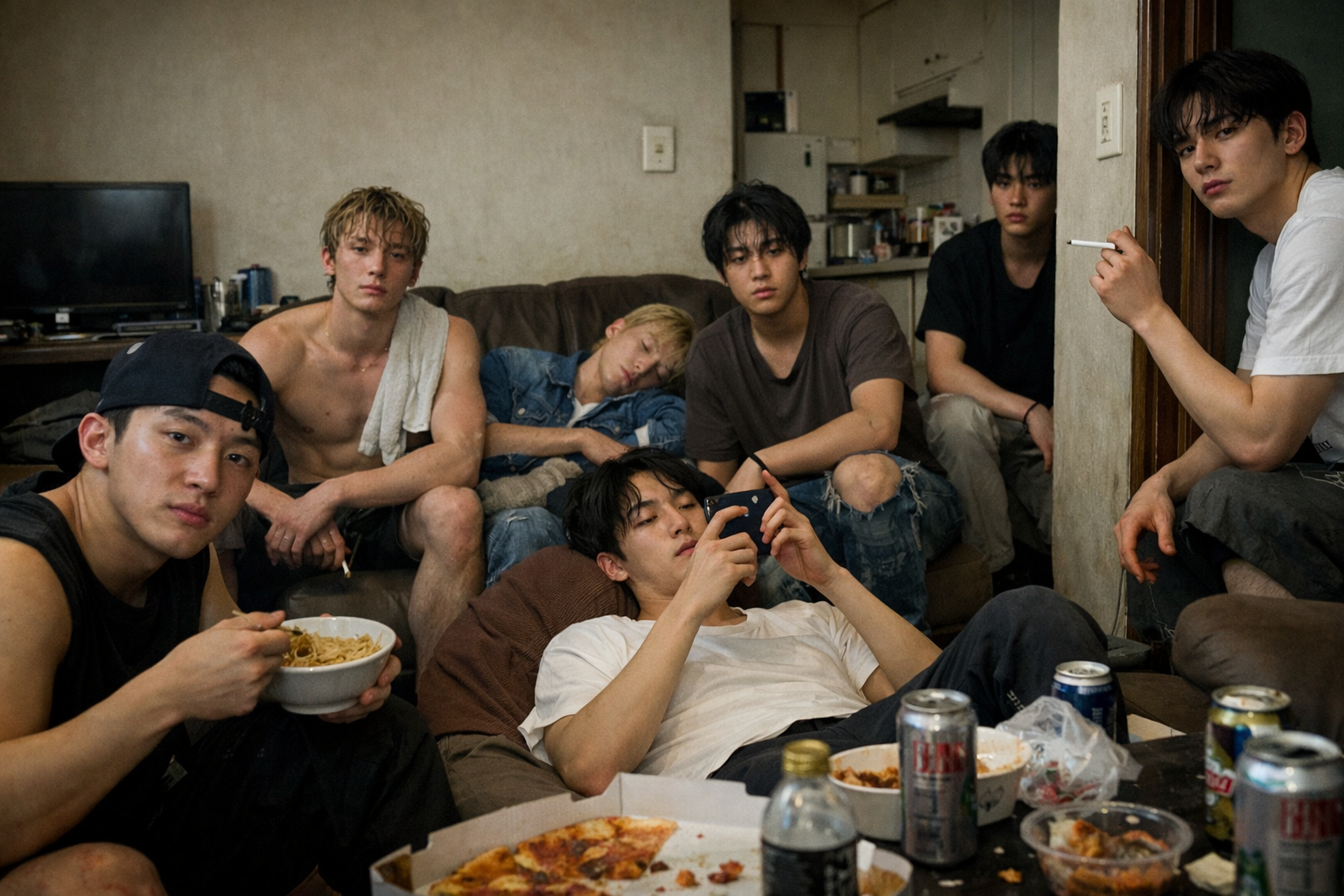
NO SCRIPT. NO FILTERS. JUST STRAY KIDS — LIKE NETFLIX EXPOSES IT, YOU’VE NEVER SEEN BEFORE
For the first time since their explosive rise from trainee rooms to global stadiums, Stray Kids step in front of the camera without the buffers of polished edits, PR packaging, or fan-service illusion. What unfolds isn’t just another glossy K-pop documentary — it’s a raw, unnervingly honest mosaic of ambition, exhaustion, brotherhood, and the relentless pressure of being the group that refuses to plateau.

The project opens not with glamour, but with silence. Studio lights half-on, instruments scattered, and the lingering tension of an unfinished song. Bang Chan, as always, is the anchor — tinkering, rewriting, questioning. The viewer sees what fans have always suspected but never fully witnessed: the invisible weight of leadership. Chan’s voice cracks not from singing, but from carrying the responsibility of being the one who has to have answers when no one actually does.
Lee Know and Hyunjin reveal the perfectionism behind the performance — the dozen takes, the micro-adjustments, the way choreography becomes a language only they speak. Their artistry is meticulous, obsessive, sometimes frustrating, but undeniably transcendent. Then comes Felix — quiet at first, reflective, his deep narration cutting through the noise like gravity. There is no manufactured drama, only the real struggle of holding one’s identity together while millions are watching.
Han and Changbin bring levity and chaos, but the documentary shows the price of creativity: sleepless nights, discarded verses, and the constant war against time. I.N, once the maknae overshadowed by louder personalities, emerges with a clarity that surprises even the members — the documentary captures the moment he stops being “the youngest” and becomes an artist with his own voice.
The climax isn’t a concert. It’s the quiet aftermath — unfiltered exhaustion, bare-faced vulnerability, and a whispered truth: “Being on top doesn’t mean it gets easier. It just means there’s more to lose.”
And yet, the resolution is not despair — it’s defiance. Against doubt. Against fear. Against an industry that prefers its idols flawless and mute. Stray Kids refuse both.